Website Live
The site you are reading, plus the pipeline that writes its own blog every night.
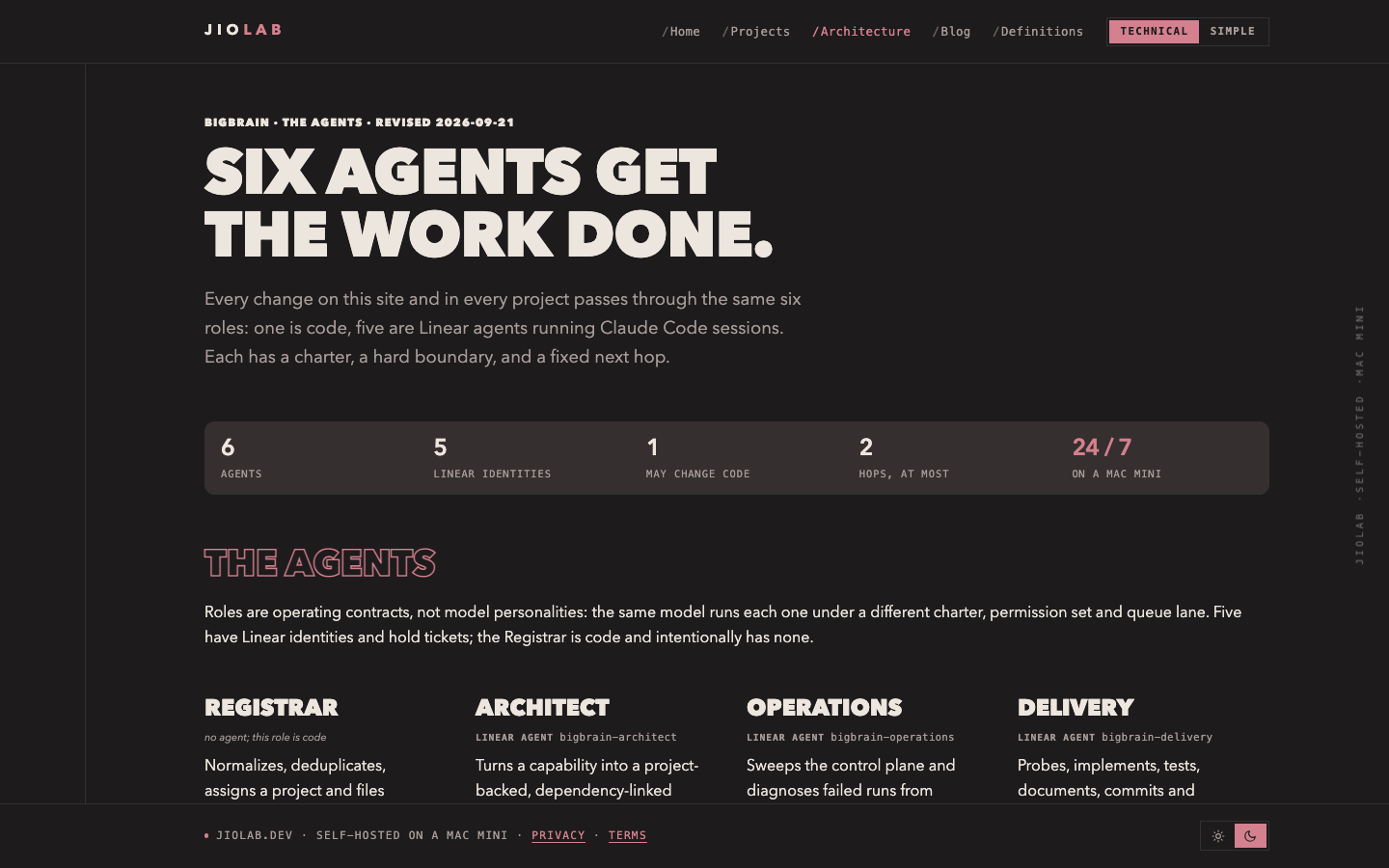
How to use it
Everything on the site is readable without an account. Six things are worth knowing.
You can read all of it without signing in. Six things are worth knowing.
- Technical / Simple, in the header Swaps every page between the engineering version and the plain-language one.Switches the whole site between the technical wording and plain English.
- Sun / moon, in the footer Light and dark. Remembered per browser.Light or dark colours. It remembers your choice.
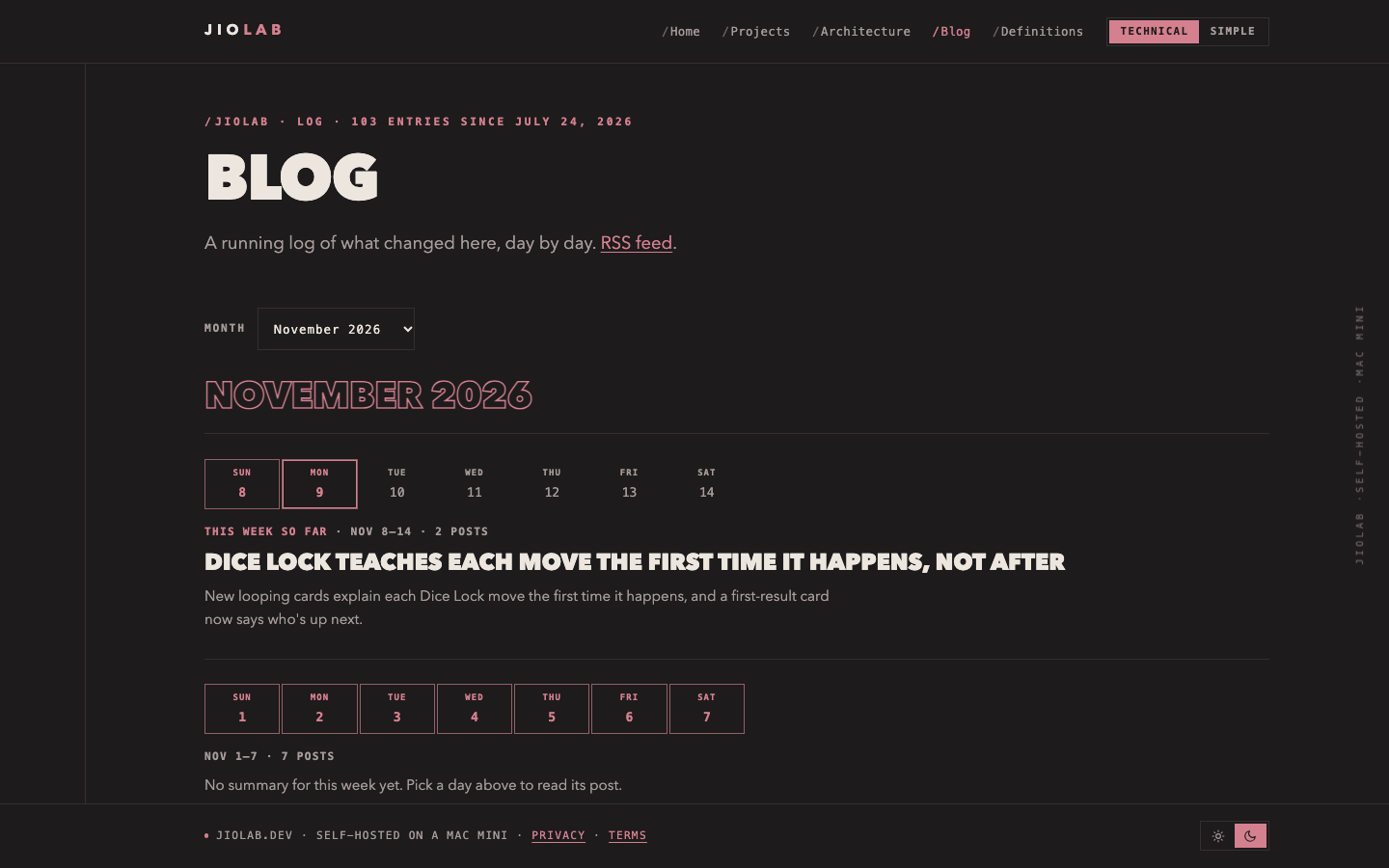
- Blog: one post per day of work Written and published automatically the night of the work it describes.A post for each day something changed, written by the system itself.
- Status pill: beside every project name Live: running now, unattended. In Progress: shipped work not running on its own. Backlog: still an idea. Abandoned: stopped on purpose, reason underneath.Live: running by itself. In Progress: real work, still needs running by hand. Backlog: just an idea. Abandoned: stopped on purpose, reason underneath.
- Definitions: click any underlined jargon Every technical term links to a plain-language entry the first time it appears.Any underlined word links to an explanation in ordinary language.
- Touches: under a project's features Hover or tap the nodes a feature touches: the rest of the diagram fades, and the frame scrolls to them if they sat off its edge.Point at one of a project's parts and the rest of the picture fades, and it slides across if that part was out of view.
Zero-Dependency Server
No framework, no bundler, no runtime dependency: the server is the standard library and nothing else, and the test suite runs with no installed packages. Every page is a real file on disk, generated from committed JSON rather than rendered per request. Deliberately boring, because the interesting parts are what writes the content.
The site itself is deliberately simple and old-fashioned. It uses no outside code at all, just what comes with the language. Every page is a plain file, written out in advance. The interesting part is not the site; it is what writes the pages.
Other Projects Publish Into It
Every seam is a committed file, never a database read. Those stores are local state, so a page rendered from one would be correct on this machine and unreproducible anywhere else, with nothing in git recording what it had claimed. Each project exports a snapshot instead, and this repo renders from the commit.
Each project writes its results here as ordinary files that get saved into the history, rather than this site reaching into their databases. That way the page can always be rebuilt exactly, and there is a permanent record of what it said.
It Writes Its Own Blog
Committing anything in any tracked repository schedules a job for that day. It reads the day's commits everywhere, plus notes from sessions that left none, then writes the post. It works in its own checkout, so it can never collide with other work, and its fast-forward merge here is the publish.
When I change anything, a job is scheduled for that day. It reads everything that changed everywhere, writes the post, and publishes it. It works on its own copy so it cannot get in the way, and simply putting the files in place is what makes them live.